
It goes without saying that every surfer's goal is to ride a wave.
Nevertheless, for the neophyte, the road to the "green wave", that which has not yet turned to foam - or "white wave" - can be long and difficult.
Beginners are generally tempted to take to the bottom waves, even if they have no technical grounding. Let's compare the respective advantages and disadvantages of learning in the foam or in the wave.
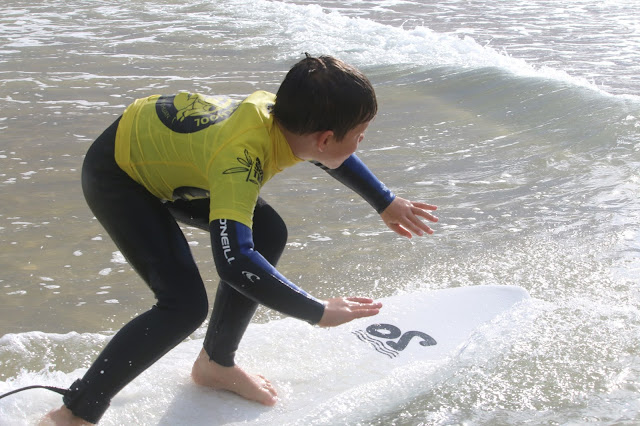
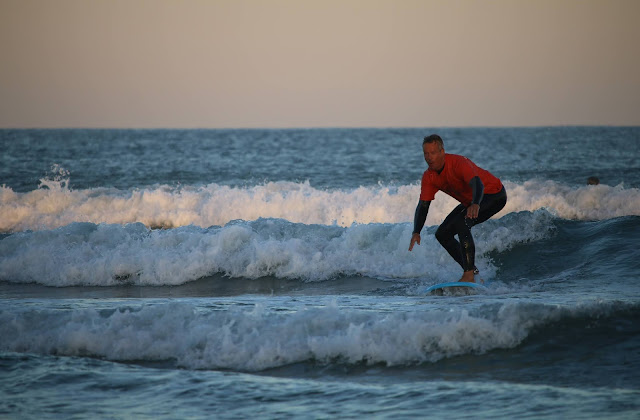
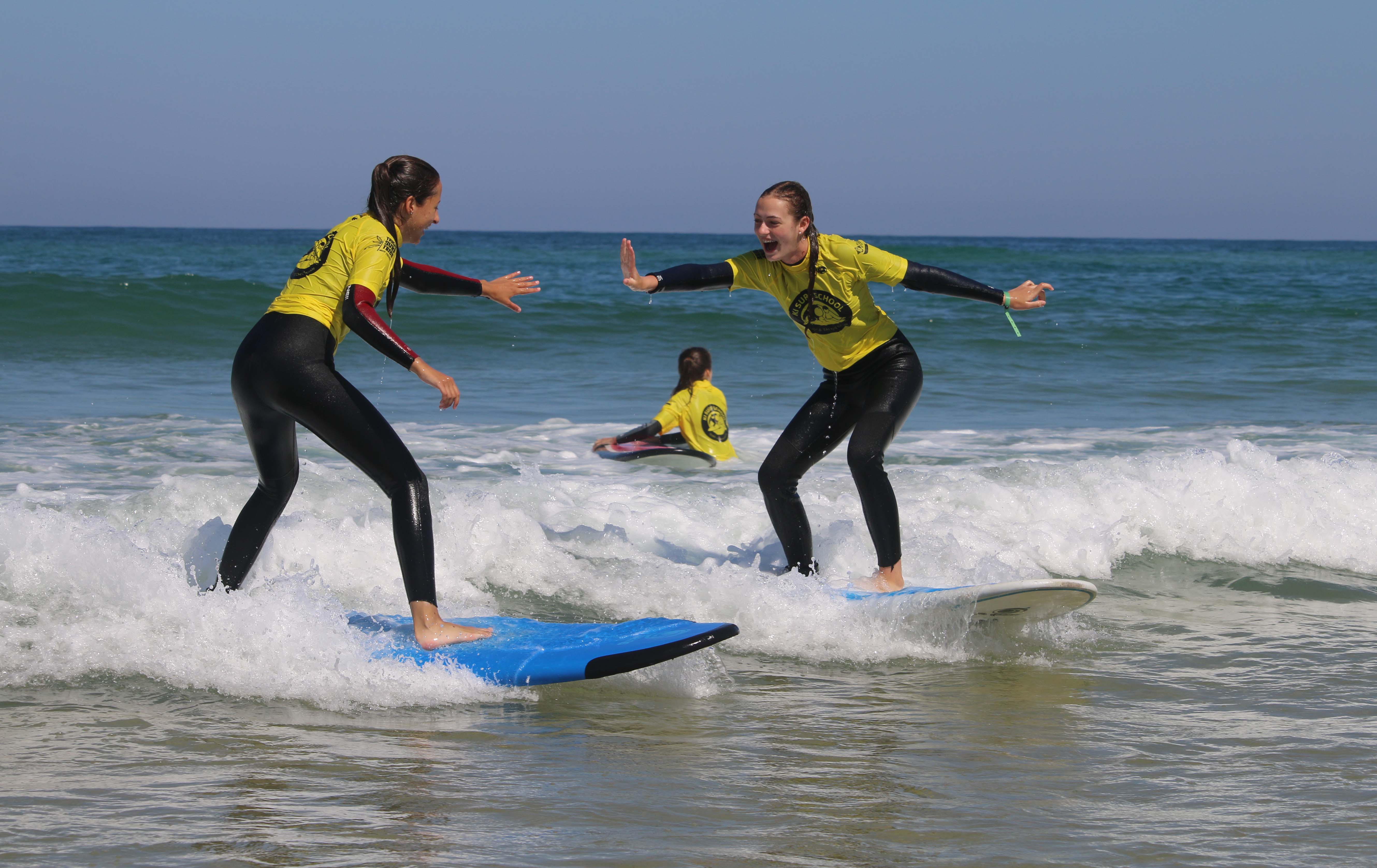
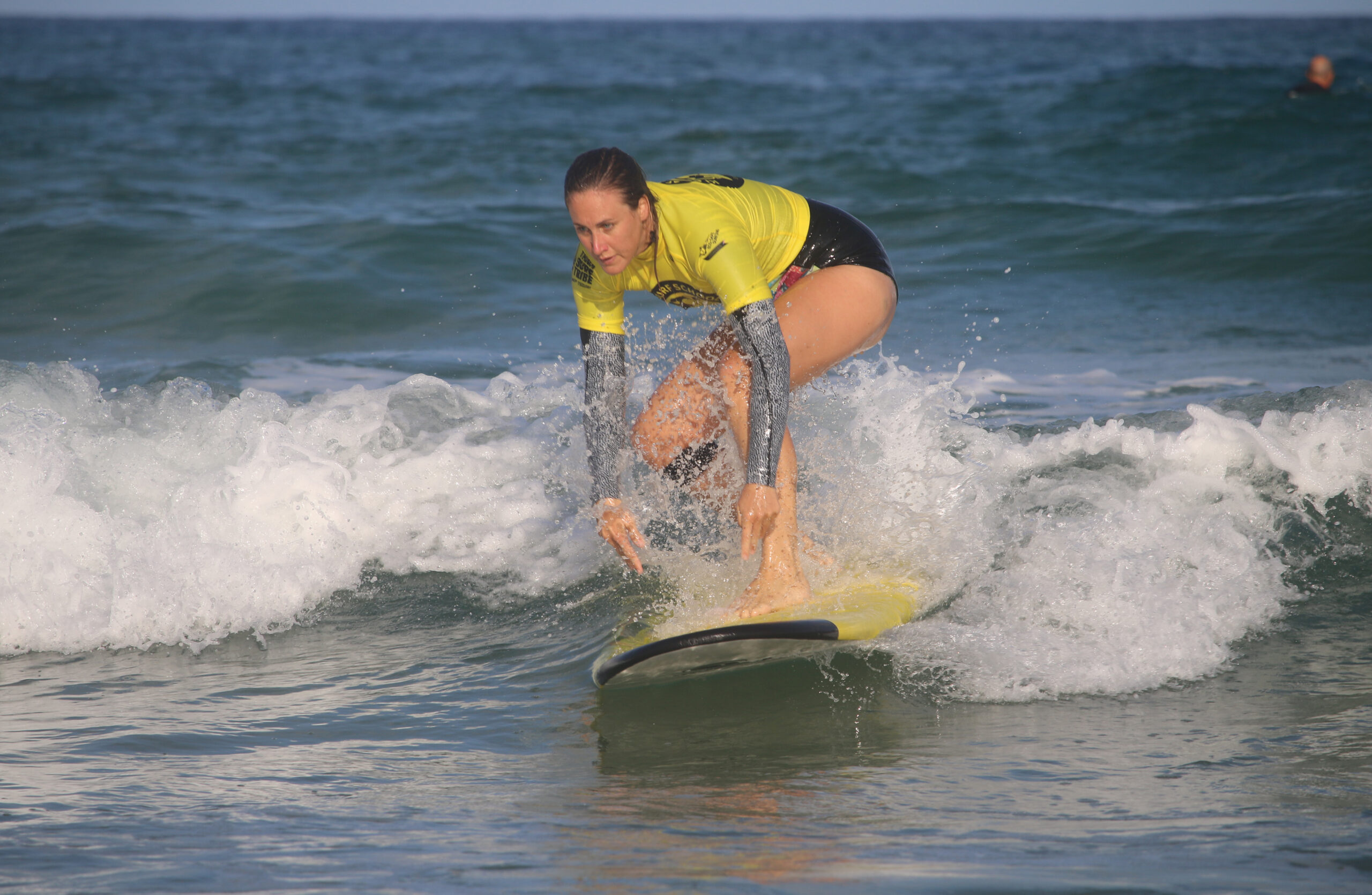
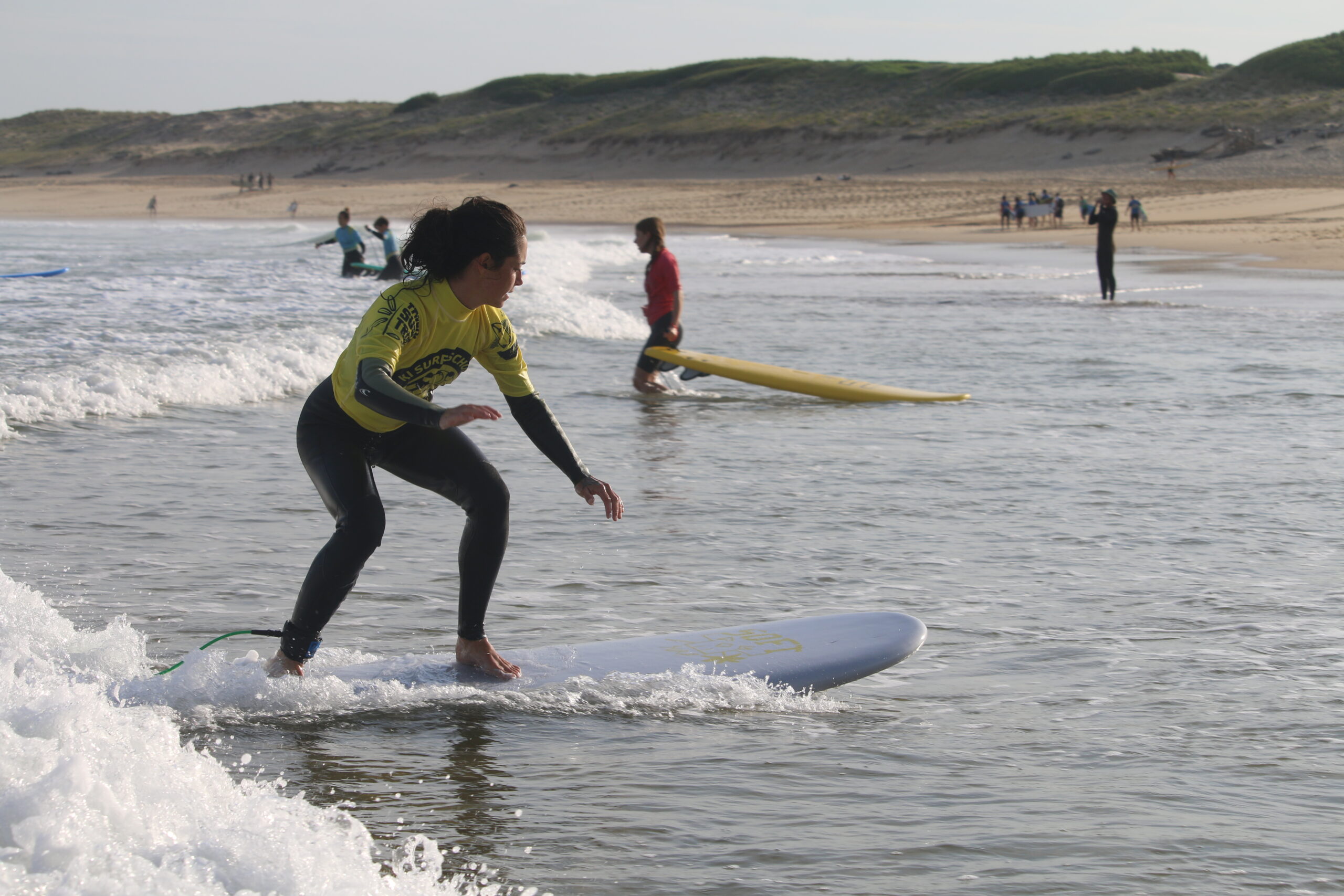
If the surfer's aim is to ride along an unbroken wave, a surf instructor will suggest that he or she first practice in the foam - which forms after the wave has broken - to quickly and easily learn the basics. A little patience, and you'll be able to ride at ease among the more experienced surfers out to sea.
The wave and the beginner
Disadvantages
- The difficulty of going after them:the aim of waves is to bring any object towards the shore, the surfer says he "passes the bar" because it's difficult to reach the zone where they form.
- The open sea: people who have never surfed before will have to paddle against the waves to get to an area where they have no foothold. Even though he hasn't yet mastered the position of balancing on the board, he'll find himself in a situation of physical exhaustion, at the mercy of the current and an element that becomes increasingly random as he moves further away from the shore.
- Reading the randomness of waves: the bigger the swell, the larger the area where the wave will break. But surfing isn't just about technique: you have to guess where the wave is going to dig in before it breaks, and to catch it, you have to be able to paddle to get to the right place at the right time. In addition to the physical challenge of propelling yourself with the strength of your arms, there's the added difficulty of reading an element in perpetual transformation. Because a wave rarely breaks in the same place as the previous one.
- Technical difficulty: Assuming the beginner has a good sense of the sea or luck and manages to catch the wave at the right moment, as soon as his board tips over into the slope of the wave, he only has a second to get up. Why do you ask? Any surfer who arrives lying down at the bottom of a wave (except a small one) will tend to plant the nose of the board. To avoid nose-diving in this way, you have to stand up between the top and middle of the wave, then bend down the slope. You can imagine how difficult it is to learn in a hurry a totally new technical gesture, in this case the take-off.
- The wipe-out and its syndromes: when the beginner has repeatedly nosed over at the bottom of the wave, he adopts defensive strategies which are regressions on the learning path. He will conclude that he was lying too far forward on his board, and adopt a backward position that will result in a bad stance. The board will then sink from the rear, the nose of the board pointing skyward, and the machine, no longer flat in contact with the water, will struggle to move forward. The board is said to "push out of the water", and rowing becomes a trial of strength, making an optimal righting, or take-off, impossible in these conditions. This positioning error will lead to a cascade of corrective movements that will be as many bad reflexes, difficult to correct later on. All these postural faults lead to muscular and joint fatigue.
Getting into a power struggle with the ocean, and even more so having skipped the learning stages, will lead to disgust, injury or, for the most persistent, a chronic inability to learn to surf. A person can spend ten years "surfing" without mastering the basics.
The wave seen up close is much bigger than that seen from the top of the dune: throwing yourself into the trough of the wave requires a certain psychic commitment, as you have to overcome the apprehension of falling. You get used to waves gradually, and venturing out without transition into big conditions can be stressful. This is why a responsible surf school will keep its beginners close to the shore. Surfing should be fun, not a source of anxiety. Big wave surfers started out in small waves just like everyone else.
Starting out in the challenging offshore waves would be like trying to learn to ski on a black slope, and a slope that would change with every lift and perpetually transform during the descent.
Benefits
When the waves are very small, they become accessible to beginners: they break close to the shore, in shallow water, they're easy to get to on foot, they're not very steep and are very forgiving of mistakes.
Small, gentle waves speed up the acquisition of surfing basics and allow you to quickly discover the pleasure of sliding down the face of the wave.
However, you should only tackle larger waves very gradually, otherwise you'll adopt bad habits: holding the edge of your board, looking at the bottom of the wave, lying too far back, pretending to paddle, etc. Reflexes that will be difficult to correct later on. Reflexes that will be difficult to correct later on.
Foam
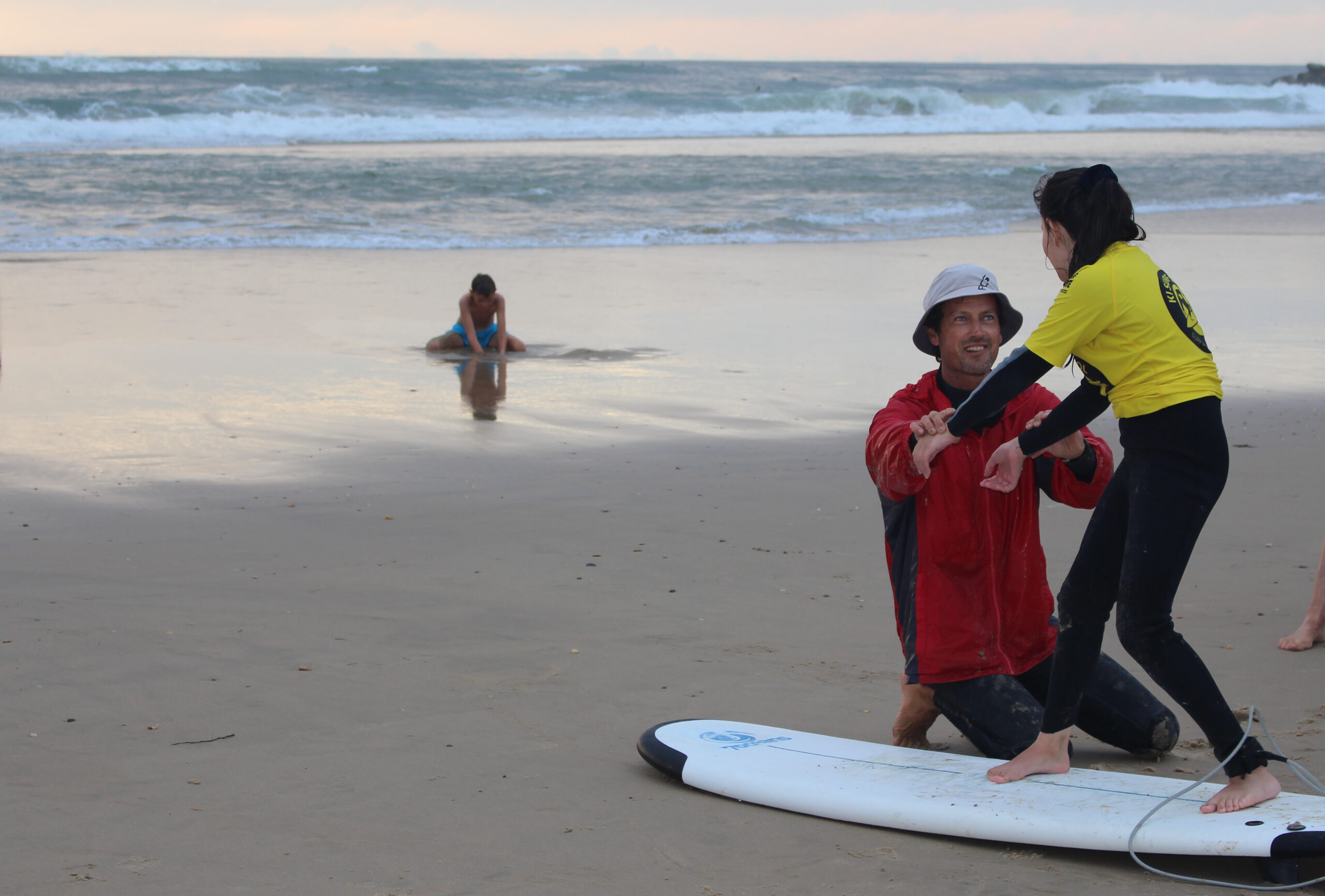
Most of the time, the first surfing lesson with a state-certified instructor is to keep beginners close to the shore. There are several reasons for this:
- Big, intimidating waves break offshore in deep water, then roll ashore as foam. By the time they reach the shore, they've lost their power, allowing a gradual, non-violent approach to the element.
- Waves never break in exactly the same place, so it's technically difficult to catch a wave, while foam rolls in a line to the shore, making it easy to position yourself to catch it.
- As beginners wait for the waves in a shallow area, they can concentrate on acquiring the position of balance lying on the board, then catching the wave, then righting it, by eliminating all the constraints of being in a wave situation, i.e. : propelling oneself solely by arm power, struggling to get offshore, drifting faster, rowing to stay in the wave zone, rowing, rowing, rowing while not yet able to balance on the board, reading the waves, rowing to catch a wave, righting oneself in a fraction of a second. In short, foams are the skiing equivalent of the green slope.
- The advantage of being on foot : beginners with little aquatic ability can familiarize themselves with the element at their own pace by staying close to the edge, knee-deep in water, and venture out further when they feel more confident. Being close to the shore makes it easy to deal with the current phenomenon, as you simply slide down to the sand and walk back to the surf zone in front of the instructor or landmark. It's also easier to lie down on the board than in a deep zone, where you'll have to pull yourself up onto the board by the force of your arms, battered by the waves.
- "Foam push": it's easier to choose a good foam than a good wave, so the white wave is a "wave machine". Foams roll in one after the other, making it possible to catch countless of them and repeat the technical gestures that will enable you to glide to the edge and right yourself on the board. An off-shore surfer will catch a wave when the on-shore surfer has caught 10 foams; the ratio is often of this order.
- The specificities of foam: in a wave, because of its verticality, the surfer has only a fraction of a second to get up, whereas in foam, he has time to apply himself and acquire the technical gestures without feeling in a hurry. In fact, in front of the foam, the surface of the water is flat, and beginners positioned correctly on their boards have little chance of nose-diving, making it easy to concentrate on righting themselves. Riding a foam board eliminates the stress of standing up at the top of a wave, a sensation which, when the wave is hollow, is akin to jumping off a cliff.
- Foam is the first step on the road to the waves: once a surfer has effectively lifted himself into the foam and maintained his balance and speed all the way to the shore, he is now sufficiently skilled and confident to try a take-off in the waves (provided the swell is not too strong). Having automated the right technical gestures, he'll be able to reproduce the top-of-the-wave righting quickly and urgently, without losing his nerve.