
As succinctly as possible, I'm going to present the various pedagogical stages of a surf lessons. They will enable the student surfer to become autonomous and improve his or her technical skills.
Of course, it all depends on the quality of the professional who accompanies you, as it's true that teaching aids have evolved little in training courses and have remained hopelessly hollow in the specialized press. A good surfing instructor is not necessarily a surfing champion, but someone who has been a beginner like you, and who has analyzed each stage of your learning, dissected the technique and honed his sense of observation to create his own teaching methods, which he will be able to adapt to each individual's level.
Of course, regular practice is an important factor in progress, but a little help from a sports coach will speed up progress where the surfer would have been stuck for years, because of a seemingly insignificant detail.
I'm not going to give away all my little secrets, just list the chronology of learning. The physical reinforcement required for advanced learning takes place naturally, as part of practice. Obviously, a student who already has experience in sports and aquatics will get through the first learning phase more quickly.
Surfing stages
Each level brings the surfer into contact with an increasingly complex environment. Catching foam on the shore, or paddling out to catch waves offshore, obviously don't present the same degree of difficulty. So, skipping any of these steps inevitably leads to failure or long periods of stagnation. Patience and perseverance are the surfer's greatest qualities.
Phase 1: the basics
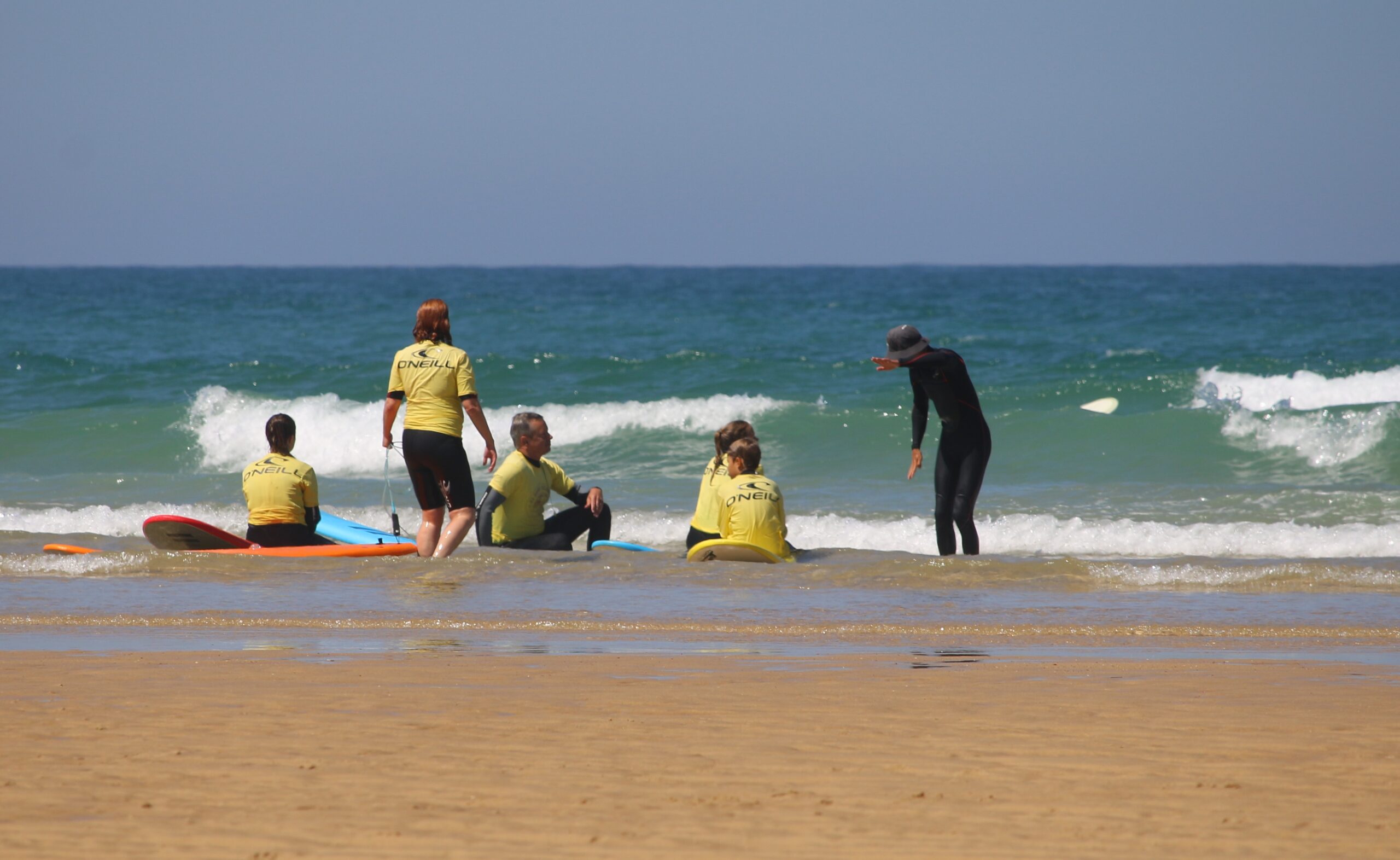
- Learning the basic movements and postures of surfing, they allow you to glide balanced on your board while maintaining optimal mobility:
- The marine environment, knowing how to position yourself in the zone best suited to your level, moving in a zone that's too difficult won't enable you to progress, using the right board, topics covered in a previous article.
- The basic rules that guarantee the safety of both the surfer and other surfers - we all remember the scene in Brice de Nice.
- The elongated balance position, the technical keys to finding the right position whatever board you use.
- The optimum position of the hands flat on the board: for the past 20 years, it's been a dismay to hear surfing certification courses repeat that the hands must be placed under the shoulders!
- The most dynamic straightening possible, according to one's abilities: why put the knee down when fluidity and flexibility are the keys to effective straightening, and when the person has the ability to do it!
- Basic techniques for maintaining speed, and therefore glide and balance, all the way to the edge.
- Steering using the eyes and upper body. The front arm, and more specifically the hand, is used as a sight.
Phase 2: Waves
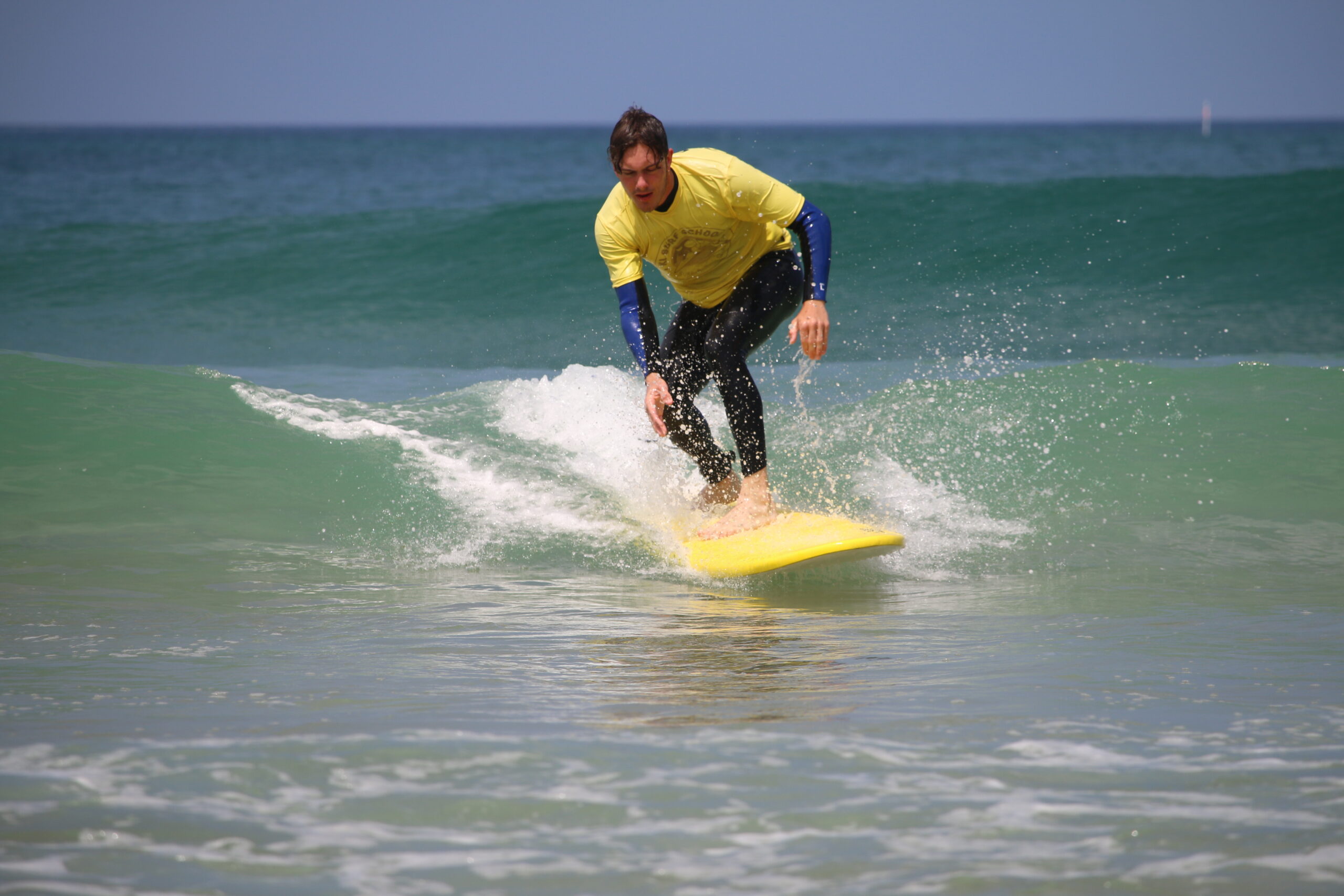
- Knowledge of the rules of safety, priority and conviviality in the water.
- Learning to row and directional maneuvers offshore, passing the helm, turning around quickly and so on. Here too, some surfers and professionals will tell you that you have to clench your fingers to row, which is nonsense. See this Surf Prévention article on rowing techniques.
- The take-off at the top of the wave, in light conditions, first turn, straight and then slightly across: reading the waves, timing and speed of execution are the keys to success.
- Read the direction of the breakers and ride the waves, preferably in the right direction!
Phase 3: Gaining wave speed
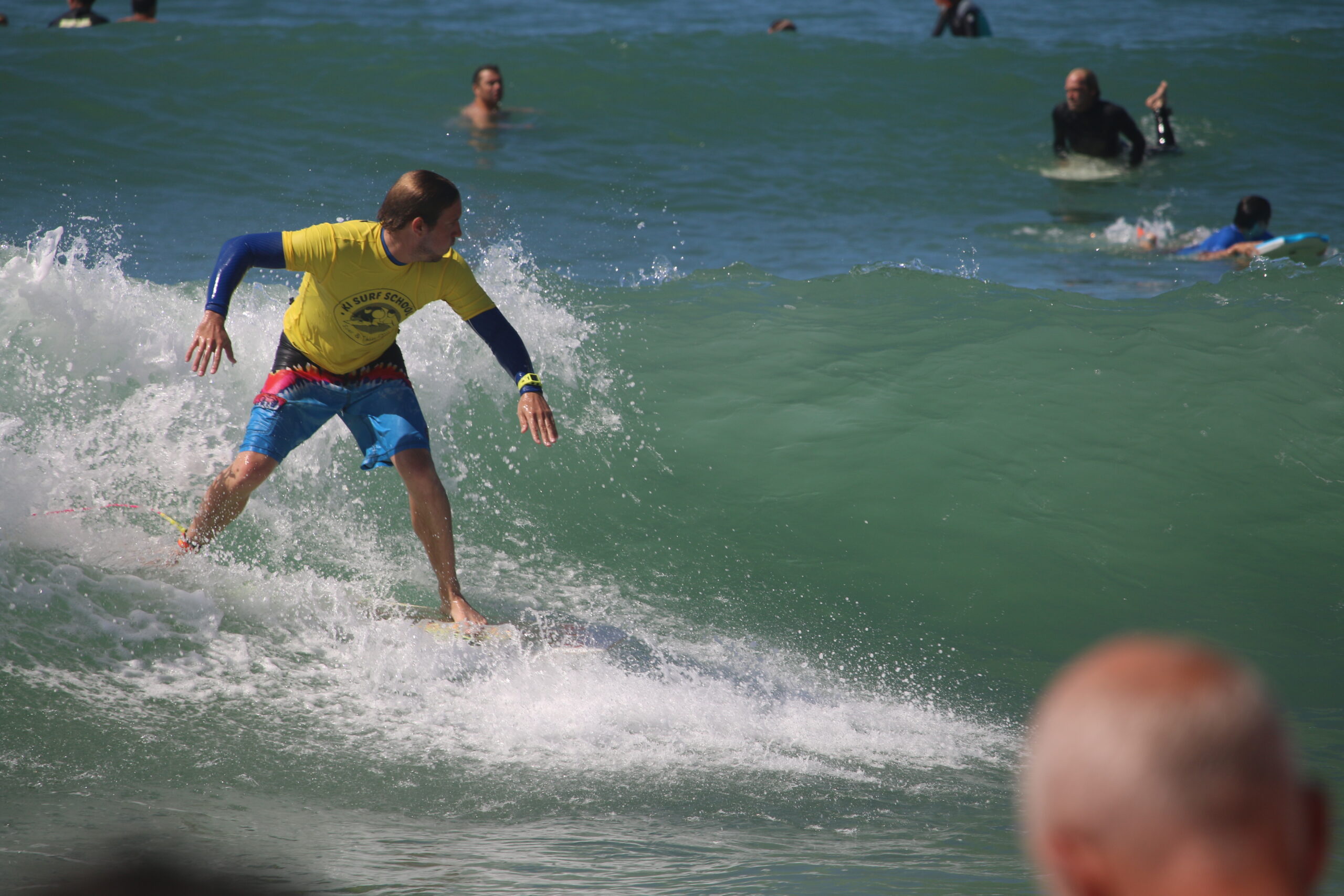
- Adapt your trajectory to the breaking wave to ride it to the end: coordinate the bending and pushing phases of the legs (speed) with the upper body, whose role is essentially directional.
- Mastering wave speed: flexing on the descent, pushing on the rail for an upward gliding effect, with alternating rail/board flat. Effective speed control plays with wave height.
- Learn to duck, if the board's volume allows: it goes without saying that a board that floats a lot will have trouble sinking underwater. There's a twofold difficulty here, both technical and in terms of analyzing the environment. You need to be able to gauge the speed at which the wave or foam is coming at you, so as to be able to trigger the duck at the right moment.
Phase 4: manoeuvres
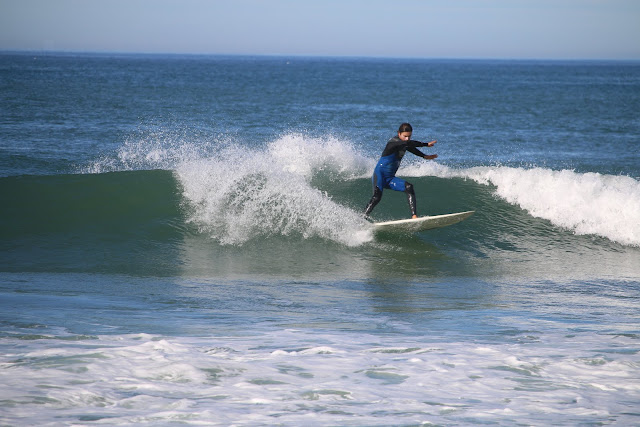
The surfer has learned the right body positions, gestures have become reflexes that enable him to react more quickly in the wave, his experience enables him to better read and anticipate variations in the environment, and he can now develop the fine skills that will enable him to perform tricks or master them better.
- To reach this stage, surfers have developed physical and technical skills that enable them to use a slightly smaller board. But not necessarily, as the key to maneuvering lies in the speed generated, so it's possible to rollerblade with a longboard. Reducing rail length does, however, shorten trajectories and make cornering easier.
- Let the trajectories finish for a better radius of action in the bottom turn, accept to aim for the beach in the descent, with the aim of tighter turns and a greater verticality of the board's angle of attack.
- The rentry at the end of the wave, the first introduction to maneuvers at the top of the wave: acquiring speed + the ability to steer the board where I want + mastering the push on the legs at the bottom of the wave = the board will lean and pivot on the foam or lip of the wave.
- Mastering the pivot at the top of the wave: anticipating the rotation of the arms + transferring support to the front = roller. The difficulty is to avoid sinking the rear (too much weight on the rear in the pivot phase) and planting the rail due to lack of speed, poor transfer of support or too late rotation of the chest.
- Knowing how to lighten your board and have extended support will enable you to learn how to change rails and return to the foam when the wave softens: a replacement maneuver that prefigures learning how to cut back.
- The floatter is technically more accessible, as the trajectory is less tight than for rollerblading, but above all requires a good reading of the wave and the technical skills necessary for the above-mentioned tricks. Be careful, however, that the board doesn't twist underfoot due to a lack of speed or anticipation, which could result in a blow to the ribs.
- The key to Aerial success: speed + ability to aim for the point at the top of the wave that will act as a springboard + lightening of the push at the top of the wave (need to have regrouped again at the top of the wave) + aiming for a point a little higher to extend the pivot initiated in the push + transferring the point to the front foot + being sufficiently relaxed at the bottom of the wave to absorb the shock of the landing and the acceleration of the board (often, the surfer falls backwards).
- There are several key elements to successful tubing: the surfer must be able to guess that the wave is going to form a tube at a particular point, by reading the variations in the wave face; then, he or she must have the technical reflexes to spontaneously adapt their trajectory, but also their speed, so as to be in the pocket when the lip throws forward. There are techniques for braking so as not to be too far ahead, and others for accelerating into the tube, since a validated tube must cover the surfer and see him or her emerge.
- There are other maneuvers or variations, such as the tail slide: the surfer transfers all his weight to the front leg and stretches the back leg to make the board's tail skid. This brings the center of gravity closer to the front of the board, allowing the fins to be lifted.
Surf coaching
Activity technique
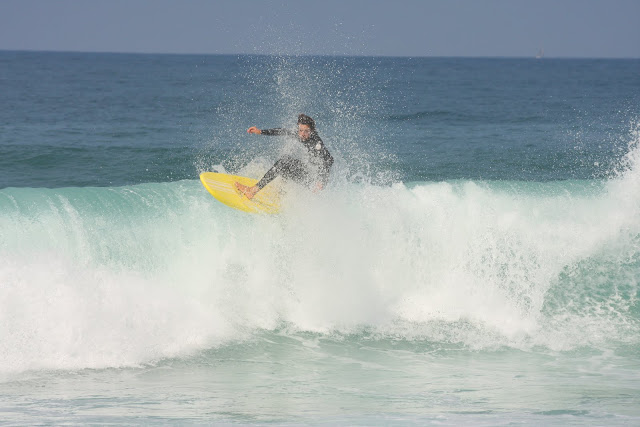
We have skimmed over the classic technical aspects of the learning stages:
- On the beach, by observing the environment and setting instructions adapted to current conditions. In a surf lesson, the ocean is often the theme of the session.
- And in the water, through constant postural readjustment to the ever-changing environment (every wave is different, conditions change with the tide), and repetition of technical movements.
A sports coach will also use photos and video to help the surfer understand the corrective measures and teaching objectives.
Training out of the water
However, unless they live in a tropical country, surfers - even pro surfers - frequently come up against climatic conditions that make training impossible.
Whatever the level of the surfer wishing to learn, it is advisable to practice sports on non-moving supports, in order to repeat technical gestures and explore the full range of motor skills. Because every wave is different, it's almost impossible to repeat exactly the same gesture over a given period of time.
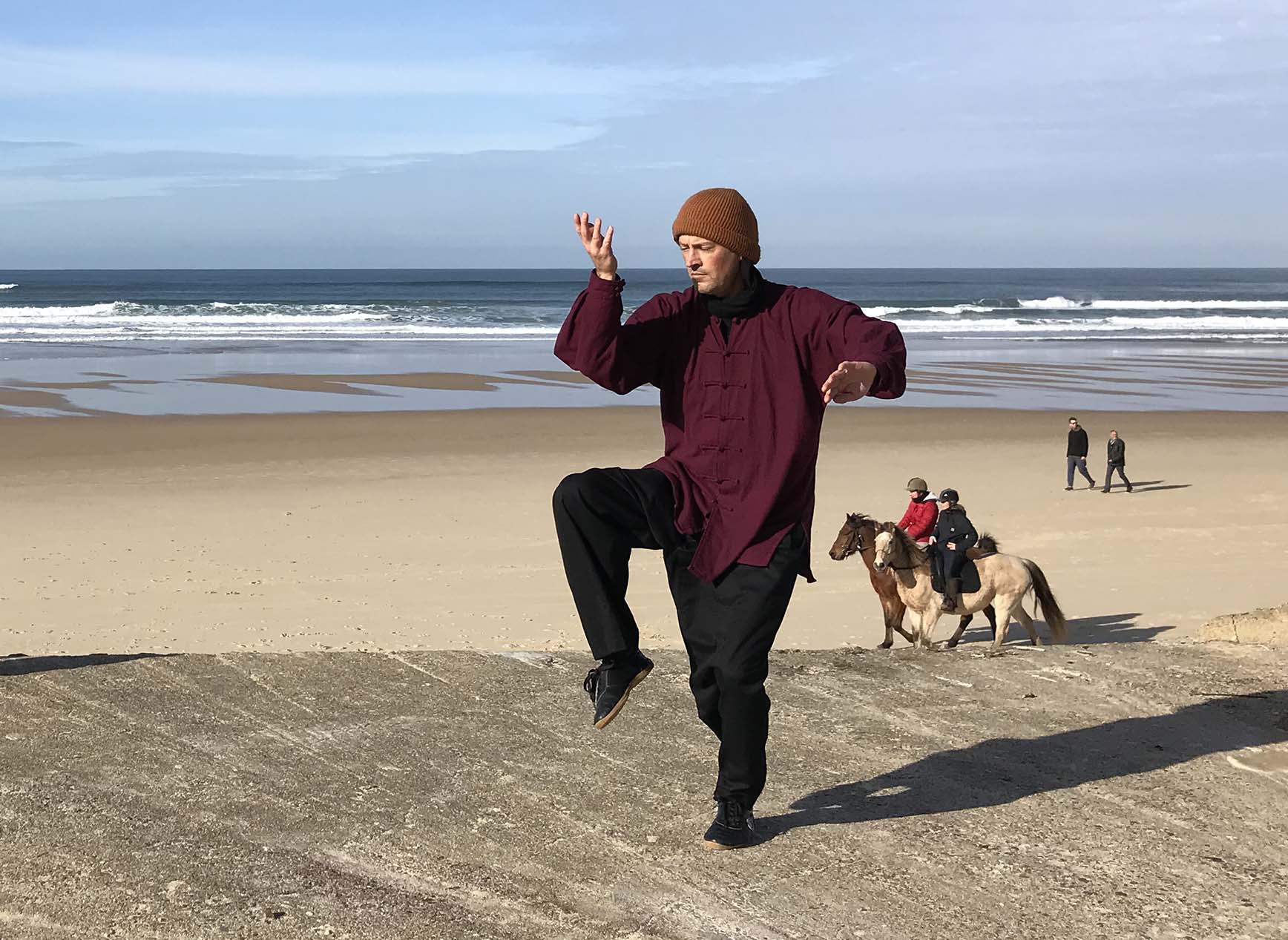
For the long winter months, when most surfers take to the water less frequently, a complementary activity will not only keep you in shape, but also help you build stamina, maintain muscle tone and improve flexibility. Some classics, such as running, swimming, yoga, team ball sports, martial arts and taichi.
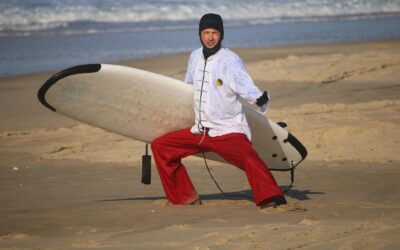
Others are less well known, but combine everything a surfer needs to perform, as in the case of tai chi chuan: Ki Surf allows you to work on relaxation, amplitude of movement, flexibility and coordination. The longer the body remains relaxed, the more explosive the muscle action. This, combined with a good use of breath, a supple, mobile pelvis and fine, progressive support transfers, will make the surfer all the more efficient when returning to the water.
Surfing values
The desire to perfect one's surfing skills must not cause one to lose sight of certain elementary aspects of the discipline: surfing is a natural sport, and the ocean element leads surfers to constantly push back their limits.
If they choose to compete, they may also want to surpass themselves by measuring themselves against their peers. However, when training, they must respect the other amateur surfers in the water. Their desire to improve must not be belittled just because they don't take part in competitions.
Training shouldn't become an excuse to be a jerk in the water, and some coaches are now insisting on this, which hasn't always been the case: you don't throw yourself like a man possessed on all the waves, without taking others into account, just because a photo tripod is on the beach.
Secondly, humility in progress: surfers should never forget that they too were beginners, and that in certain hostile conditions, the ocean will put them in their place. Furthermore, and this is a universal law of learning, even a very good surfer or coach will always find something to perfect their technique or knowledge.
Changing surf spots, surfing destinations and riding surfaces also helps you to progress by multiplying your riding experiences and getting out of your comfort zone. And to understand that it's through openness and sharing that you learn the most, not by closing the door on your spot or the borders of your country.